
Psyllium Husk and Hemorrhoids: My Painful Experiment
The internet makes it sound like psyllium husk is a miracle cure. Everywhere you look, people are saying it’s a game changer for digestion, for constipation, and yes—even for hemorrhoids. I believed them. I thought maybe this would be the thing that finally made my painful bathroom trips easier.
But for me? It didn’t work that way. In fact, it made my hemorrhoids worse.
My First Try: Sachets of Fiber
I started with the ready-made psyllium sachets—one serving each. The instructions were simple: mix it in water, stir until thick, drink it down. So I did one in the morning, one at night.
The next day, something strange happened. First came the old stool, the broken little pieces that had been sitting there. But after that? A long, massive, solid log. I’m talking about a poop so long it almost shocked me. And honestly—it felt good. My stomach felt light. My gut felt empty. Unlike before, where I’d strain multiple times just to get the leftovers out, this was one smooth, continuous push. One big release.
I thought, “Okay, this is it. Psyllium is amazing.”
But there was a problem. I already had a flare-up when I started. My butt was sore, inflamed, sensitive. And while my stomach felt great, my poor hemorrhoids screamed in pain. That one giant stool stretched and strained everything, leaving me more swollen than before. Relief in the belly, agony in the butt.
The Second Try: Smaller Dosage, Same Problem
I stopped for a while, then tried again. This time, I bought a big 500g bag of psyllium husk and went gentle—just one teaspoon in water.
But this had its own problem. The stool came out drier, rougher, like it was sticking to my insides on the way out. Instead of gliding smoothly, it scraped. It hurt. And once again, I thought, “Nope. Not worth it.”
Maybe it was my fault. Maybe I didn’t drink enough water. Maybe the ratio was wrong. But I had to listen to my body, and my body said stop.
What I Learned (the Hard Way)
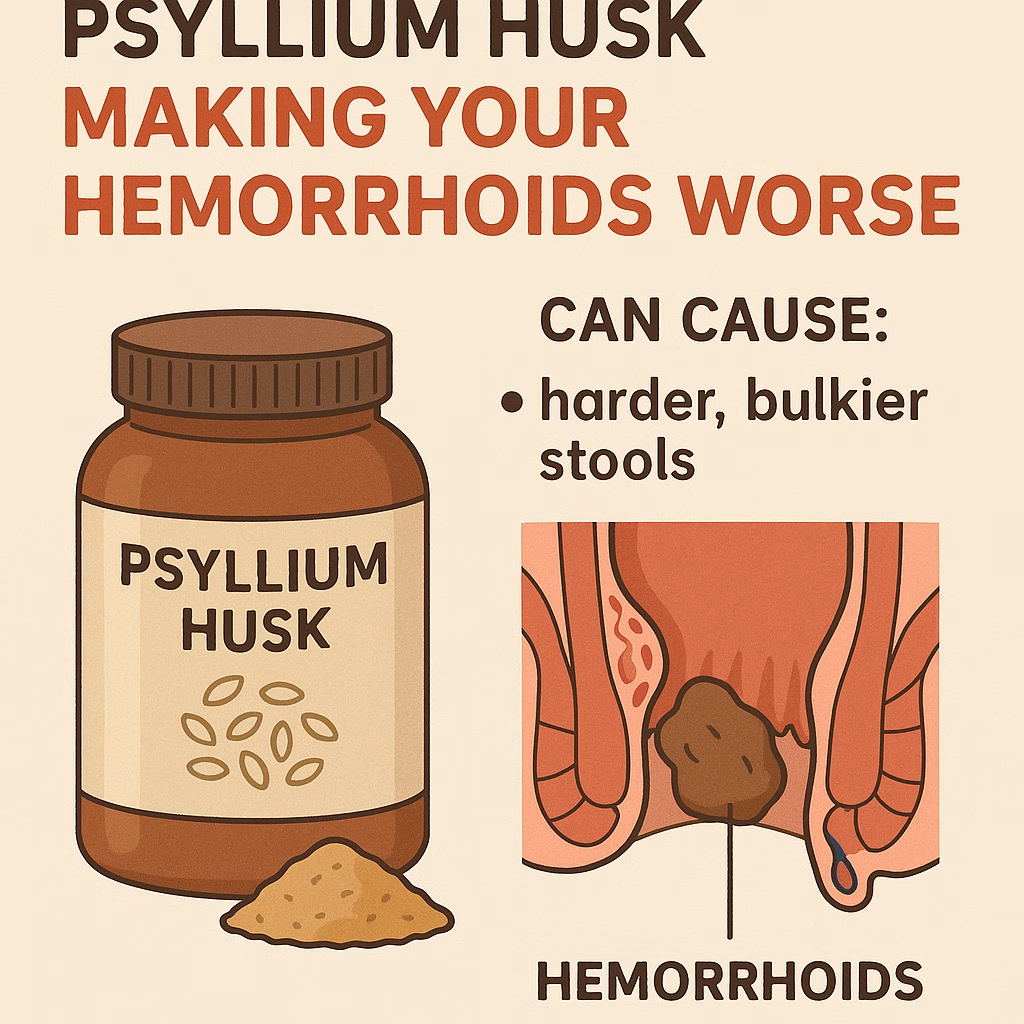
Here’s the thing: psyllium husk works for a lot of people. It bulks up your stool, cleans you out, and leaves your stomach feeling light. But when you’ve got a hemorrhoid flare-up? That bulk becomes your enemy. Bigger stool means bigger pain.
I still have that bag of psyllium at home. Maybe one day I’ll experiment with mixing tiny amounts into smoothies—less than a teaspoon—just to see if there’s a gentler way. But for now, I avoid it.
And honestly, why force it? There are so many natural sources of fiber—leafy greens, fruits, vegetables, oatmeal. Food that doesn’t just bulk you up, but also gives you vitamins, minerals, and nourishment. Psyllium husk is just fiber, nothing more. It cleans your gut, sure, but too much cleaning can also flush out the good bacteria, the probiotics your body actually needs.
So my takeaway? Psyllium husk was more pain than gain for me.
The Alternative That Worked for Me: Electrolytes
Here’s where it gets interesting. Instead of forcing more fiber, I started focusing on electrolytes—minerals my body actually needed. Things like Gatorade or electrolyte powders you can mix with water. And you know what? My poops changed.
They became smoother, softer, easier to pass. Not too thick, not too dry—just right. If you’ve ever seen the famous Bristol Stool Chart, mine started looking like a perfect type 4. And the best part? No extra pain for my hemorrhoids.
Now, every morning and after lunch (I do intermittent fasting), I make sure I get my electrolytes. And every day, my bathroom trips feel less like torture and more like… well, normal.
Try this No sugar Electrolyte Powder from Amazon, it helped me poop easier
Final Thoughts
I’m not saying psyllium husk doesn’t work. For some people, it’s life-changing. But for me, with my hemorrhoids and my sensitive gut, it was a disaster. Painful, messy, and not worth it.
So my advice? If you’re curious, try it slowly. Tiny amounts. With plenty of water. And only when you don’t have a flare-up.
But don’t forget—nature already gave us fiber in the food we eat. Fruits, vegetables, oats—they’re kinder, gentler, and they nourish you too. And if you want a little extra help? Don’t underestimate the power of electrolytes.
In the end, healing hemorrhoids is about listening to your body. For me, that meant walking away from psyllium husk. For you, maybe it’ll be different. But if my painful little experiment can save you from the same mistake—then at least my butt’s suffering wasn’t in vain.
Read 5 Foods to Avoid During Hemorrhoid Flare-Ups to Ease Pain Fast

The ONE Hemorrhoid Solution That Actually Works
Recent Posts
FAQ: Quick Answers
Psyllium husk can help some people by softening and bulking up stool, making bowel movements easier. However, during a hemorrhoid flare-up, the extra bulk can actually cause more pain and irritation, as larger stools may stretch and strain sensitive tissue.